Showing posts with label Fantasy Realm. Show all posts
Follow on Twitter!

REVIEW: 'Street Fighter: The Legend of Chun-Li' trains, then knocks out its own potentially viable premise

Mar 3, 2009

Many people did not expect anything great to come from "Street Fighter: The Legend of Chun-Li," which was seen as another frivolous video game adaptation with no reason to exist other than to appease gamers.

And the film appears to deliberately try to fail to meet even this meager expectation.


"Street Fighter: The Legend of Chun-Li" would otherwise be a decent action flick if the initially promising story had not eventually become very frivolous, if one of the main supporting actors had taken his character seriously and if references to the video games had been limited to keeping the names of primary characters involved.

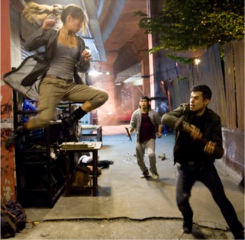
Chun-Li (Kristin Kreuk), whose wealthy and seemingly altruistic father is kidnapped when she is a child, as an adult comes under the tutelage of a martial arts mystical master named Gen (Robin Shou), who like her father was once an agent of the shadowy Bangkok-based Shadoloo corporation later headed by the evil M. Bison (Neal McDonough). Gen trains his student to look beyond her own pain in order to oppose Bison, who plans to bulldoze the city's slums once he muscles his way toward ownership, and helps its people save their homes. 

A not-too-bad premise drive this story in which Chun-Li voluntarily leaves behind her wealthy estate in Hong Kong to live in Bankok's slums in order to understand the plight of its poor population, who are either hardworking or thieves, much as a young Bruce Wayne does in 2005's "Batman Begins. 


But this attempt to make Chun-Li earn her "street cred" falls short in that there is no real reason why she would do so other than to meet Gen on a whim to find out the origin of a suspicious scroll.

Perhaps Chun Li's commitment to the Bangkok destitute would have been more convincing if she had made a more intimate connection with one of them instead of simply establishing a reputation for wiping the floor with a few criminals who terrorize the area. Instead, moviegoers are expected to accept that some mystical collection binds Chun-Li to her newfound destitute friends.
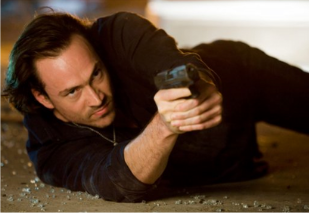
Another friend who Chun-Li fails to get to know, but somehow is on the same page with is Chris Kline's Charlie Nash, a Bangkok police detective with past experience in dealing with Shadaloo. 


Kline seems to try hard to not sell the frivolous dialogue meant to portray Nash as a slick cop with a penchant for living on the edge and flirting with his new partner for no other reason than to sell himself as a bad boy.  

But the 96-minute-long film does not need to establish a meaningful connection between its title character and the people who populate her surroundings because her mission again eventually becomes a self-interested bid for revenge once Bison, whose portrayal by McDonough is as seductively charming as it could be considering the abstractness of his character, does away with one of her loved ones. 

Kreuk is as a consequence relegated to spouting out lines meant to make her seem cool before or after helicopter-kicking an opponent into submission.

Somewhere in-between her fighting is a mystical subplot explaining why Bison is so heartless that is a strange attempt to tie the villain's relationship with his daughter to that which Chun-Li shares with her own. Conjuring fireballs to enhance already gravity-defying martial arts moves is also something that could have been left out.

"Street Fighter: The Legend of Chun-Li" sets up its own promising premise simply to disappointedly knock it down in a film that is specifically targeted for nostalgic fans of the video game franchise who are sure to dish out $10 to watch it. More disappointing than anything else is that the film could have delivered much more.

Popcorn rating:
(2 out of 5 pieces)

Show more!
Follow on Twitter!

REVIEW: 'The Family Man' fails to learn the moral lessons that might have made it a wonderful life on film

Feb 20, 2009

"The Family Man," which is now playing on Hulu, is a novel, promising take on the premise of "It's a Wonderful Life" on paper. 

But it ends up being a shallow film that somehow neuters it title character into valuing domesticity more than anything else while in the process choking the range of performances by its supporting cast.


Immediately distasteful about the film is a scene in a grocery store across the street from the building where Jack Campbell works. A cashier with a heavy Chinese accent and a flamboyantly urban customer (Don Cheadle) claiming to have won the lottery get into an argument about the validity of his ticket that ends with the brandishing of gun.

As possible as it is to walk into a convenience store with these kind of characters, Hollywood in this instance overcompensates for its lack of real-life perspective, designing a scene that could have worked without the perpetuation of racial stereotypes used to introduce Cheadle's character and show that Jack might be a driven businessman, but honorable when it counts the most. 

Then toward the end of the film is a similar scene that for some reason attempts to point out the triviality of racism, which is a noble message, but awkwardly placed in a story that has sparing to do with social progression.

Even more stereotypical is the noticeably messy suburban home, minivan, wife dancing naked in the shower to a song included in the film's soundtrack, two kids, dog and football-loving friends Jack wakes up had he not left indefinitely for London 13 years ago and stayed behind with his college girlfriend Kate (Tea Leoni) to play house. It, of course, takes Jack 50 minutes into the film to realize this is why he is no longer a wealthy Wall Street magnate.

Either the responsible screenwriter of the film has no connection with the real world at all or the studio created a very ideal American setting that would appeal to moviegoers in the U.S. and abroad.  

Perhaps the too formulaic premise of the film is what ultimately makes it a disappointing film when compared to "It's a Wonderful Life," which is about an all around good man who doubts his own personal worth in the world. Most of the classic film is spent showing George Bailey come of age and get into the predicament that causes the character to consider suicide, convincing the audience that he is OK enough not to want him to jump off that bridge.

Naturally the reversed premise of "The Family Man" is about an all around flawed, ruthless businessman who takes too much pride in his professional success, going so far as provoking a quasi angel to show him anything lacking from his life. But instead of showing Jack as a man worth saving, he is portrayed in a large part of the film as very selfish, ambitious and only moderately content with the life with Kate the character could have had.

While flawed characters are more interesting than highly moral ones to explore in a story, Jack does not go through anything particularly enlightening to convince him that the road most traveled is the one better-suited for him. It just kind of happens in one scene in which Jack plays with his daughter during a picturesque snowfall.

So that the moral of the story is not that life is worth living, but rather that suburbia is a more altruistically pleasant way to live as opposed to being one of the many unhappy, cut throat Wall Street movers and shakers. And that is a gross Hollywood oversimplification if ever there was one.

Cage is well-suited for the role of Jack Campbell in that he is able to complement it with his characteristic freak-outs at how everything is suddenly different, but delivers only an adequate performance when it becomes necessary for the character to win back the life with which he presumably falls in love.

As for Leoni, she is left with nothing to do with her character but act as Jack's always sympathetically tolerant punching bag.

Cheadle, who is usually a great actor, portrays an even more limited character, who is partly a narrator and later the enforcer of the absurdly strict rules of the magic realism, of all things, that make the story possible.

Not as magical as it is meant to be, "The Family Man" is simply an interesting, but meaningless sequence of events that needlessly takes more than two hours to present on the silver screen. It is recommended for anyone who has a lot of time to kill and access to a high speed Internet connection.


Popcorn rating:
(3 out of 5 pieces)

Show more!
Follow on Twitter!

REACTION RELOAD: Top 10 ways Steven Spielberg, George Lucas 'raped' Indiana Jones in 'The Kingdom of The Crystal Skulls'

Oct 8, 2008

"Indiana Jones and the Kingdom of Crystal Skulls" on DVD and Blu-ray will allow fans to process the movie for what it is now that South Park helped heal the wounds of disillusionment from its overall substandard quality.


The following are 10 specific ways in which Steven Spielberg and George Lucas in a crusade to make a quick buck raided and defiled a sacred temple of a movie franchise that should have remained locked away in the memories of 1980s moviegoers.

1. Indy should have hung up his bullwhip because the nearly 20 years that it took to bring this adventure to theaters was enough to make it seem too far apart from the rest of the movies, and the dramatic jump from Indy meeting and adventuring with his father to doing the same with his son was too much to digest. This latest adventure would have worked if it occurred after two more movies in the 1990s, but Harrison Ford understandably did not like crystal skulls.


2. Indy should not have told fans what he did the last 19 summers. He should have simply beat up or fled from the bad guys in "Kingdom of The Crystal Skulls" the way Jennifer Love Hewitt did in the two slasher movies in which she starred.

Filmmakers find creative ways to reveal background information, but Spielberg and Lucas relied solely on exposition to tell moviegoers Indy served as a pre-CIA spy after "Last Crusade," got into several tight spots with a partner named Mac, and that his father and Marcus Brody (Denholm Elliott) have since died. They essentially subscribed to the anime storytelling technique of providing answers to questions no one asked and that have no place in what is meant to be realistic movie dialogue.

3. Indy should not have sought out aliens, or rather the quartz skulls of aliens. Part of what made the archaeologist's past adventures so exciting was the sparing magic realism that was never fully exploited, but provided them with that extra specialness.


Moviegoers already knew Indy would ultimately find legendary artifacts such as The Lost Ark or The Holy Grail, but what was most appealing were challenging obstacles he would have to encounter and overcome by the skin of his teeth, not the MacGuffin. Roswell Grays - if that was not enough, it turns out they were from another dimension - were simply too big of a shark for fans to jump, let alone for a relatable not-so-super protagonist. 

This is a much bigger shark that was presented than when a much younger Indy, known then as Belgium Captain Henri Defence, ended up being the one to finally stake Dracula in "The Young Indiana Jones Chronicles." If Steven Spielberg and George Lucas insist on remaining loyal to the show's canon, every frivolous part of it will be mentioned and seriously judged.

4. Indy should not have sought out aliens from South America if it was impossible to film at the actual location, not in front of a green screen. 


Not only do the "Kingdom of The Kingdom Crystal Skulls" special effects make the look of the movie inconsistent with its predecessors, but they also provide the same overwhelming sense of vertigo and subsequent discomfort reminiscent of watching George Lucas' new Star Wars trilogy. How moviegoers kept from vomiting when the Temple of The Crystal Skulls was broken apart and flew around in pieces in a fast, circular motion is anyone's guess. 

Too much CGI simply makes movies look fake and cheesy. A computer-generated jungle populated by cannibal fire ants simply looks like a computer-generated jungle populated by cannibal fire ants.


5. Indy should have went after a more personal MacGuffin for once. Every artifact Indy found but ultimately did not bring home in his first three movie adventures were at the bequest of someone else such as the U.S. government, an Indian village, or his father. 

If Spielberg and Lucas wanted to do something original, they should have had Indy go after an artifact he always wanted to find such as some mystical bobble from the lost city of Atlantis, The Hand of Midas, Shangri-la, the location of a relocated Library of Alexandria, or something other than a crystal skull that looks like he could have purchased it at a Universal Citywalk store.

6. Indy should not have entered The Cold War because he is too universal of a character for which to provide an overwhelming sense of patriotism against The Soviet Union. Rest assured that Russians did not rush out to see "Kingdom of the Crystal Skulls."


Yes, he fought against the Germans in World War I and  took them on again when they became Nazis in World War II, but they were arguably the most evil force in history, so patriotism might have had little do with his military service. A lack of creativity in finding antagonists that would not upset profits outside of the Western world was apparently impossible or too hard to do. 

How Indy's patriotism further detracts from the true essence of the character is that he spent most of his life in other parts of the world to have developed a great love for America and expresses cynicism toward the government that takes away from him The Lost Ark. He is a man of the people who believes artifacts belong to their rightful owners or museums, not as a potential weaponry for the military or as personal collection pieces for the wealthy.


7. Indy should not have entered that refrigerator for obvious reasons. Maybe Spielberg and Lucas will cut the scene in several possible special edition collections. 

Steve Carell's Michael Scott from The Office would say this is a stark contrast from the protagonist in "Lost Ark," who was a normal guy that was barely able to fight off Nazis, but who in "Kingdom of the Crystal Skulls" could bullwhip away an assault rifle, survive a jet engine-powered ride through the desert and several waterfall drops, not to mention surviving a nuclear blast. Talk about an active senior citizen.


8. Indy should not have gotten hitched because his nuptials detract from the bull whipping, thrill-seeking macho essence of the character. 

"Kingdom of The Crystal Skulls" robbed male fans of the fun prospect that Indy might one day include them in one of his adventures and robbed female fans of the dream that they might ground him in an adventure known as Holy Matrimony. Indy's son, Mutt Williams (Shia LeBeouf) was already born out of wedlock, which fits into the playboy aspect of the character's personality, so the marriage was simply unnecessary. 


Him marrying Marion Ravenwood (Karen Allen) seems like nothing more than an explanation as to how he fathered the children mentioned in "The Young Indiana Jones Chronicles."

9. Indy should have let his bullwhip do the talking, not George Lucas. His signature choppy dialogue could be detected in the less-than-one-minute scene in which Indy rediscovers his love for and successfully woos Marion Ravenwood. 

Nowhere in this movie was there any indication through dialogue of how the character's personality has changed in the last 19 years other than that he misses his dead loved ones and hates Communists. The entire screenplay depended on nothing more than nostalgia and running gags from previous films such as Indy's fear of snakes and use of the word "Junior."


10. Indy should not have recalled his youth on ABC because a lot of people likely did not know he once met Pancho Villa in "The Young Indiana Jones Chronicles" and could care less whether the show's canon dictates that he eventually has to conceive children. 

Moviegoers were interested in knowing about Indy's exploits, not his entire life story, especially not his improbable encounters with almost every influential person that was alive during the early 20th century, and an infamous not-so-alive character as well.


What can be seen from another viewing of "Kingdom of The Crystal Skulls" is that it is a very late, uninspired continuation of Indiana Jones' adventures, the plot and dialogue of which portray a familiar, but contrary version of the original character, abuse the degree of creativity and reality to which fans of the franchise became accustomed, and necessitates a visual style that makes the movie appear alien from its predecessors.

Show more!
Follow on Twitter!

REMINDER RELOAD: HBO orders second season of new show that breathes life into the stagnant vampire genre

Sep 17, 2008

What would happen if vampires "came out of the coffin" to expose their existence to the world is the unique premise of an already very successful new cable drama series.

"True Blood," which HBO recently renewed for a second season after the airing of its first two episodes, is set in a world in which a Japanese company develops a synthetic drink that provides vampires with the dietary requirements they attain from sucking the blood of humans to survive, so it allows them to live openly among prejudice humans.

A promising spin on the longtime vampire genre, the new show is like "Buffy The Vampire Slayer" in that it is about a seemingly normal, yet ditzy young woman, Sookie Stackhouse (Anna Paquin), but who has a not-so-secret extraordinary ability that makes it possible for her to become infatuated with a tall, dark and brooding newcomer in town with unusually long canines, Bill Compton (Stephen Moyer). 

Sookie likes the more than 100-year-old creature enough to invite him into her home. Like in "Angel," he cannot come in otherwise.

The show is also like the continuation of New Line Cinema's "Blade" movie series in that these silver-fearing vampires find a final solution to their need to hunt humans for sustenance. Not only that, lobbyists argue in support of equal treatment for these former neck biting creatures, an accusation they confidently deny because of a lack of evidence.

Though she does not set out to slay all of his kind, Sookie connects with Bill in that she is unable to do to him what she unintentionally does to others, that is, read the thoughts running through his mind. If anything, her open-mindedness allows her to defend Bill, and vice versa, from people looking to hurt or exploit him in Bon Temps, a fictional town no doubt placed in Louisiana because of how writer Anne Rice made the region a vampire haven in her novels.

Suffice it to mention that the vampire in question is suspected when the police find a woman's dead body in her home.

Add to the aforementioned premise that humans secretly find the prospect of having sex with vampires very alluring, and because it is an HBO series undead prostitutes provide them with their unique services. 

Sookie's brother, Jason (Ryan Kwanten), in particular, is so fascinated with the act that he watches a vampire porno tape while he has rough sex with a woman of the breathing variety, which makes him another prime murder suspect when police find her body.

Not yet halfway through its first season, "True Blood" is an auspicious cable series that exploits the campy Hollywood vampire stereotype to explore the touchy subject of confronting bigotry in the South. That and more than sexually suggestive interaction between Sookie and Bill should make for at least two seasons of riveting television. Bill himself and the long life he has lead as a vampire should prove to be interesting.

What threatens to drive a stake through the heart of the new HBO drama is a reason to exist beyond having an original spin of a hackneyed premise and the potential loss of the romanticism associated with vampires in a world in which they have nothing or no one from which to hide. 

Viewers might tune out if if becomes a vampire version of "Days of Our Lives."

Show more!
Follow on Twitter!

REMINDER: Hogwarts teens to get close, intimate as darkness looms in Harry Potter 6

Aug 6, 2008

Teenage hormones will tempt Harry Potter and his Hogwarts pals to hook up with one another on July 17, 2009 while the sinister forces of He-Who-Shall-Not-Be-Named increasingly threaten both the magical and muggle worlds.


This is what Warner Bros. Pictures' official movie synopsis of "Harry Potter and The Half-Blood Prince" and the novel of the same name indicate will happen when the sixth installment of the series is released in theaters. The boy wizard (Daniel Radcliffe) will reveal his attraction to someone close, witness betrayal and endure another casualty in preparing to fight against Lord Voldemort (Ralph Fiennes) and his army of Death Eaters.

What is new at Hogwarts during the sixth year is the arrival of a new professor to the school, Horace Slughorn (Jim Broadbent), a "well-connected and unsuspecting" man Dumbeldore believes knows the key to defeating Voldemort, the movie's official synopsis shows.

One of Warner Bros. Pictures' stills of the movie shows that he will specialize in teaching students about potions. Maybe this means Alan Rickman's Severus Snape will teach something else. It is the dark arts that he fancies anyways.


A sneak peek of the movie on YouTube indicates that the key to defeating Voldemort could be "Horcruxes."

Rowling's "Half-Blood Prince" novel shows Horcruxes are seven splintered items containing The Dark Lord's soul, one of which was his diary when he attended the school under the anagram, Tom Marvolo Riddle. Harry destroyed the novel in 2002's "Chamber of Secrets." 

The Internet Movie Database's synopsis for the movie shows that Harry will take "private lessons with Professor Dumbledore, during which Harry learns the dark secrets of Voldemort's past, hoping that they could use these secrets to find a way to defeat him," so maybe the Horcruxes will be introduced during a flashback sequence.    

Including the Horcruxes MacGuffin in the movie would explain why Voldemort kept conveniently coming back from the dead to try to kill Harry in three of the last five movies.

Another plot device from the novel that will definitely be in the movie is a potions textbook Slughorn gives Harry. In the novel on which the movie is based, the textbook's back cover reveals it used to belong to the half-blood prince, hence the title. 

As mentioned earlier, Snape could move on to teach students something new. One possibility is that he may finally be appointed to teach them how to deflect dark magic. Though Snape has been passed over for the teaching post many times because he used to be a Death Eater, Dumbeldore had no choice but to allow the longtime potions professor to teach Harry how to block invasions of his mind by Voldermort in the last movie. 

The official "Half-Blood Prince" synopsis alludes to Harry's suspicion that "dangers may even lie within the castle," so the headmaster's desperation to teach his students to combat dark forces may be Snape's ticket to an overdue promotion. After all, the boy wizard's seemingly bat-shit crazy theories tend to be true.

"One student remains aloof. He is determined to make his mark, albeit a dark one," the official movie synopsis shows.

Fans who have read "Half-Blood Prince" know this part of the synopsis refers to Draco Malfoy (Tom Felton), who Harry obsessively suspects is up to something sinister in the novel.  But the circumstances of Draco's curious activities are not what they seem.

Could The Death Eaters be attacking students? Or could Draco be a Death Eater like his father?

Guaranteed to attack Harry and his pals are their more than friendly feelings for one another, the official movie synopsis shows. 

Harry reveals he likes Ginny Weasley (Bonnie Wright), but he has to compete for her attention with another boy. Hermione Granger (Emma Watson) also has a crush, but she will not come to terms with the object of her desire, Ron Weasley (Rupert Grint), or the competition, Lavender Brown (Jesse Cave). These love triangles the official movie synopsis highlights should provide a few humorous, lighthearted moments before the movie series becomes progressively darker.

Of great interest is how Ron will respond to Harry's crush on his sister and whether Radcliffe and Wright can concoct a convincing attraction to one another that has never been alluded to in previous movies.

Radcliffe, who had his first on-screen kiss in "Goblet of Fire," confirmed in the aforementioned sneak peek of the movie that Ron will kiss Lavender in the new movie.

More entertaining should be what director David Yates said in the sneak peek is Ron's "slapsticky" tryout to be keeper for the Gryffindor Quidditch team. Maybe he will somehow bumble his way toward success.

Movie footage from the sneak peek reveals a headline from The Daily Prophet newspaper, "Death Eater Attack Targets Muggles," which means Voldermort is either seeking to conquer both the magical and non-magical worlds or push his enemies to act drastically to stop his hostile advances.

Because the Hogwarts teens got their hands dirty and the bad guys strengthened their resolve in the last movie, "The Half-Blood Prince" could turn out to have less exposition and action, especially since two more movies in the series remain in which to resolve the main conflict.
 
If the novel and other sources are an indication of what is to come, this next installment will allow Harry and his pals to go through some normal, yet humorous teenage angst with the threat of Voldemort and his minions represented as attacks on students, another tragic loss and flashbacks from The Dark Lord's past.

Could the movie include a flashback to Voldemort's youth as an orphan?

The movie will likely be like a darker "Chamber of Secrets" with a slightly older cast of characters.


Show more!
Follow on Twitter!

REVIEW RELOAD: Hellboy's oversized right hook drives a funny, but very familiar sequel

Jul 16, 2008

Moviegoers who are bummed that the premiere showings of "The Dark Knight" this week are sold out can in the meantime enjoy an action-packed laugh riot called "Hellboy II: The Golden Army."


While the plot is unoriginal, the government-funded demon hero Hellboy (Ron Perlman) is challenged in different and amusing ways in this sequel to his first movie in 2004. And he kicks a lot more butt.

At the beginning of the movie, Professor Broom (John Hurt) tells a very young Hellboy in 1955 a bedtime story about Balor (Roy Dotrice), an elf king who once ordered the construction of an indestructible army of golden machines to wage war against power-hungry ancient humans. But the army's ruthlessness in battle caused the king to regret the decision, so he brokered a truce to divide the Earth into two realms. Humans would live in the cities and mythical creatures would inhabit the forests.

The Golden Army, which was controlled by whoever wore a three-piece crown, was locked away. Each side kept a piece of the crown to ensure peace.

King Balor's son, Prince Nuada (Luke Goss), who voluntarily went into exile because he did not agree with the terms of the truce, returns in the 21st century to take his father's throne by force and his piece of the crown to use The Golden Army to wage war against humanity. He believes humans violated the treaty by encroaching on the forests to build parking lots and shopping malls.

Nuada also steals a second piece of the crown from a charity house, where he later unleashes a swarm of carnivorous tooth fairies to cover his exit.

Driving the movie is The Bureau of Paranormal Research and Defense team's mission to stop Nuada from awakening The Golden Army.

When they arrive at the charity house in question, Liz (Selma Blair) uses her pyrokinetic abilities to light up and kill the room full of carnivorous tooth fairies. Hellboy deliberately stands by a window and gets blasted down to the street where TV cameras expose his existence to the world.

Red seems determined to be acknowledged and accepted by the humans that he protects from the creatures that go bump in the night. Meanwhile, Liz is angry with him for being preoccupied with the outside world and not with her needs. Unbeknownst to him, she is pregnant.

If that was not enough, Hellboy encounters humans who treat him like a monster because of his demon appearance. Their reactions cause HB to consider whether he should continue to fight to defend them against otherworldly creatures with which he could better relate.

Shaking things up as well is Johann Krauss (Seth MacFarlane), a smoky essence encompassed in a special suit. Krauss, a German agent, is sent to the BPRD to lead the team and watch over Hellboy, who does not like how his commanding officer sticks to established procedure. Red also does not like Germans for obvious reasons. One of the funniest scenes in the movie occurs as a result of the two agents literally butting heads in the bureau's locker room.

Funnier is a scene in which Hellboy and a lovesick Abe Sapien (Doug Jones) get so drunk that together they start to sing Barry Manilow's "Can't Smile Without You." Abe quickly falls for Princess Nuala (Anna Walton). 


That she shares a psychic and physical link with her twin brother Nuada poses a problem for Hellboy, who challenges the prince's claim to lead The Golden Army but cannot kick his butt without harming Abe's love interest. 

But Nuada's moves are impressive enough to carry fight sequences in which his opponent is mostly on the defensive.

Throughout the 120-minute movie, HB sees a lot of action that pushes the plot forward. He battles a behemoth troll (Brian Steele), a forest god and many soldiers from The Golden Army.

Though so much action in a movie tends to detract from deep introspection of the main character, moviegoers get to see Hellboy grow up. Whereas the first movie showed what defined him as a hero, the sequel shows what matters to him as an individual.


What detracts from the movie is that the premise is very similar to that of 2005's "Blade II," which was also directed by Guillermo del Torro.

In both movies, the protagonist gets caught in the middle of a struggle between a father and son to rule a society of supernatural creatures who live in seclusion because of a treaty with humanity. The protagonist has to save the day after the son one-ups the father and sets his sights on conquering the world. But before this happens, the son entices the hero to join him because they are both outcasts.

Though the premise is unoriginal, it at least gives Hellboy something to fight against in the second of what seems likely to become a movie trilogy.

"Hellboy II: The Golden Army" introduces many different creatures that inhabit a visually unique world, so the comparison with "Blade II" is not as apparent. 
Most visually impressive is a blind, eerie creature that looks like a mix of an angel and a demon with eyes on its wings. It acts like a neutral Grim Reaper, allowing Liz to make a decision that affects Hellboy's ill-fated destiny. 

This decision, and what happens at the movie's conclusion, sets up a probable sequel. A safe bet would be to follow the Indiana Jones movie trilogy's recipe for success prior to "Kingdom of the Crystal Skull" by having Hellboy and the BPRD squad again fight some Nazis. Grigori Rasputin was revived in the first movie. Why not do it again?

Popcorn rating:
(4 out of 5 pieces)

Show more!